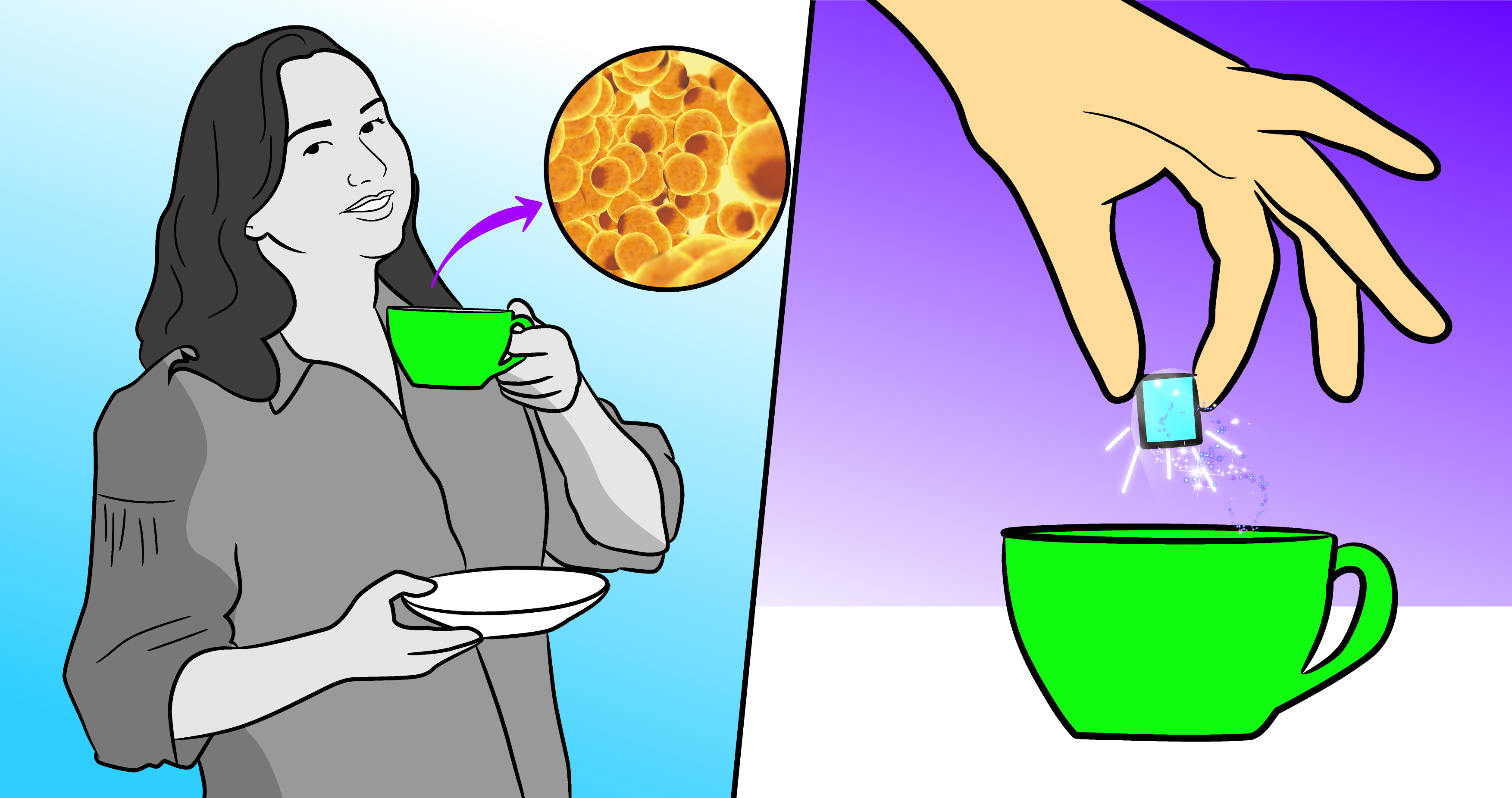
What Is Ketosis, Biologically Speaking?
Ketosis is a metabolic state in which the body shifts from using glucose as its primary fuel source to relying on fat-derived molecules called ketone bodies.
Under typical dietary conditions, carbohydrates are broken down into glucose, which circulates in the bloodstream and is used for immediate energy. Insulin helps regulate this process by signaling cells to absorb glucose and, when in excess, store energy as fat.
When carbohydrate intake drops significantly, this system changes. Blood glucose levels fall, insulin decreases, and the body begins looking for an alternative fuel source. That alternative is stored fat.
The transition, however, happens in stages.
Step 1: Lower Carbohydrates → Reduced Insulin Signaling
The first shift begins when carbohydrate intake is restricted, usually below 50 grams per day.
As glucose availability declines, insulin levels follow. This is important because insulin acts as a “storage signal.” When it is elevated, fat storage is prioritized. When it drops, the body is permitted to access stored energy.
This hormonal shift is what allows fat breakdown to begin.
Research published in The American Journal of Clinical Nutrition has shown that lower insulin levels are directly associated with increased fat oxidation, especially in low-carbohydrate conditions.
Step 2: Glycogen Depletion and Energy Transition
Before the body fully relies on fat, it uses stored glycogen—chains of glucose stored in the liver and muscles.
These reserves are limited and typically depleted within 24 to 48 hours of carbohydrate restriction. As glycogen is used, water stored alongside it is also released, which explains the rapid initial weight drop many people notice.
But metabolically, this phase creates a gap.
Glucose is no longer readily available, and fat utilization is not yet fully efficient.
This is often where symptoms like fatigue or brain fog appear—a phase commonly described as the “keto flu.” It reflects a temporary mismatch between energy demand and energy production.
For a deeper look at this transition phase, see: → What Happens During the First 7 Days of Keto
Step 3: Activation of Fat Breakdown (Lipolysis)
As insulin remains low, the body activates lipolysis—the breakdown of stored fat.
Triglycerides stored in fat tissue are broken into fatty acids and glycerol. These fatty acids enter the bloodstream and are transported primarily to the liver.
At this stage, the body is successfully mobilizing fat, but it still needs to convert it into a usable form of energy, particularly for the brain.
Step 4: Ketone Production in the Liver
Inside the liver, fatty acids undergo a process called beta-oxidation. This leads to the production of ketone bodies:
-
Beta-hydroxybutyrate (BHB)
-
Acetoacetate
-
Acetone
These molecules are released into the bloodstream and serve as an alternative fuel source.
Unlike fatty acids, ketones can cross the blood-brain barrier, making them especially important during low-glucose conditions.
Studies published in Frontiers in Physiology and Nutrients have shown that Best ketones provide a stable and efficient energy substrate, particularly for the brain during carbohydrate restriction.
Step 5: Transition to Ketone Utilization
Once ketone levels rise, tissues throughout the body begin using them for energy.
The brain, which normally depends heavily on glucose, gradually adapts to ketones. Muscles increase their ability to oxidize fatty acids. Overall glucose demand decreases.
However, this shift is not immediate. It requires metabolic adaptation.
Step 6: Fat Adaptation (The Often Overlooked Phase)
Fat adaptation refers to the body becoming efficient at using fat and ketones as primary fuel sources.
This process can take several weeks and involves:
-
Increased mitochondrial efficiency
-
Improved fat oxidation
-
Stabilization of energy levels
Importantly, being in ketosis does not necessarily mean you are fully fat-adapted.
Some individuals enter ketosis but continue to experience:
-
Low energy
-
Slow fat loss
-
Plateaus
This suggests that the presence of ketones alone is not the determining factor—how effectively the body uses them is equally important.
For a deeper breakdown of this phase: → Fat Adaptation Explained (What Actually Changes)
Step 7: Sustained Fat Burning and Energy Regulation
Once adaptation occurs, the body becomes more consistent in its energy production.
Fat becomes the primary fuel source, hunger signals often stabilize, and blood sugar fluctuations are reduced.
This is the stage where many people begin to experience more predictable fat loss—but even here, outcomes can vary.
Why Ketosis Leads to Fat Burning (But Not Always Fat Loss)
From a physiological standpoint, ketosis supports fat burning through:
-
Lower insulin levels
-
Increased fat mobilization
-
Alternative energy production via ketones
However, fat burning does not always translate directly into fat loss.
Other factors can influence outcomes, including:
-
Hormonal signaling (such as cortisol and insulin sensitivity)
-
Sleep and recovery
-
Electrolyte balance
-
Degree of metabolic adaptation
This helps explain why some individuals see steady progress, while others encounter plateaus.
Where Many People Get Stuck
At this point, a common response is to intensify effort:
-
Eating fewer calories
-
Reducing carbs further
-
Increasing exercise
But in some cases, this approach can create additional stress on the body without resolving the underlying issue.
Because once your metabolism has adapted, the challenge is no longer just entering ketosis—it’s ensuring your body is actually responding to it efficiently.
This is where many people start to notice that something isn’t working the way they expected.
So What Determines Whether Ketosis Works for You?
The key variables are not just dietary.
They include:
-
How your body regulates insulin
-
How efficiently you transition into fat adaptation
-
Whether your metabolism remains responsive over time
Understanding these factors becomes essential if progress slows or stops.
FAQ: Ketosis, Fat Burning & Common Keto Mistakes (Science-Based)
1. How does the body burn fat during ketosis?
When carbohydrate intake drops (typically below ~20–50g/day), insulin levels decrease. This triggers lipolysis, where stored body fat is broken into fatty acids.
These fatty acids are transported to the liver and converted into ketone bodies, which become an alternative fuel for the brain and muscles.
👉 In simple terms: Low carbs → low insulin → fat release → ketones → fat used as fuel
2. Can you do keto while using GLP-1 medications?
Yes—but it’s usually not necessary or optimal for most people.
GLP-1 medications already:
-
Reduce appetite
-
Slow digestion
-
Improve blood sugar control
Combining them with keto can sometimes create over-restriction or digestive issues, and many experts suggest a more balanced approach instead.
👉 Both strategies target similar pathways (appetite + insulin), so combining them isn’t always additive.
3. What does 70% fat look like on keto?
A typical keto macro split is:
-
70% fat
-
20–25% protein
-
5–10% carbs
In real meals, this often looks like:
-
Eggs cooked in butter + avocado
-
Salmon + olive oil + leafy greens
-
Nuts, seeds, fatty meats
👉 It’s not “eating fat randomly”—it’s structured high-fat intake replacing carbs as energy.
4. What are 7 signs your body is in ketosis?
Common indicators include:
-
Reduced appetite
-
Increased mental clarity
-
Rapid initial weight loss (water + glycogen)
-
Dry mouth or increased thirst
-
Fatigue (“keto flu” early phase)
-
Metallic or fruity breath (acetone)
-
Increased ketones in blood/urine
👉 These signs reflect your body shifting fuel systems, not just losing weight.
5. How long do you need to be in ketosis to lose fat?
Fat loss can begin within days to weeks, but meaningful changes usually occur over:
-
2–4 weeks → adaptation phase
-
4–12 weeks → measurable fat loss
Ketosis itself doesn’t guarantee fat loss—energy balance still matters.
6. Does Ozempic cause ketosis?
No. Ozempic (semaglutide) works through GLP-1 hormone pathways, not ketosis.
It reduces appetite and improves insulin response, but it does not directly trigger ketone production.
👉 You can lose fat without being in ketosis.
7. What are the biggest mistakes people make on a keto diet?
The most common metabolic errors:
-
Eating too many calories from fat
-
Not enough protein → muscle loss
-
Ignoring electrolytes (causes fatigue, headaches)
-
Expecting rapid fat loss
-
Using “keto snacks” instead of whole foods
👉 Keto fails when it becomes high-fat overeating, not structured metabolism.
8. Is it good to go in and out of ketosis?
Frequent switching can reduce adaptation efficiency.
-
Early keto adaptation takes 1–3 weeks
-
Constantly exiting ketosis may prevent full metabolic adaptation
However, some people use cyclical keto strategically—but it requires planning.
9. What’s the longest you should stay in ketosis?
There is no universal limit, but sustainability matters more than duration.
Some people use keto short-term (8–12 weeks), while others follow it longer under supervision.
Potential concerns with long-term strict keto include:
-
Nutrient deficiencies
-
Electrolyte imbalance
-
Adherence difficulty
👉 The best duration is the one you can maintain without metabolic stress.
10. What’s the worst carb for belly fat?
Not all carbs are equal. The most problematic are:
-
Refined sugars (soft drinks, sweets)
-
Ultra-processed carbs (white bread, pastries)
These cause rapid blood sugar spikes → insulin release → increased fat storage.
👉 The issue is glucose volatility, not carbs themselves.
11. What are the “9 rules of keto”?
There is no official scientific “9-rule system,” but effective keto generally follows:
-
Keep carbs very low (20–50g/day)
-
Prioritize healthy fats
-
Maintain adequate protein
-
Stay hydrated
-
Replenish electrolytes
-
Avoid processed “keto” foods
-
Monitor portion sizes
-
Be consistent (allow adaptation)
-
Adjust based on your body response
👉 Keto works best when treated as a metabolic strategy—not a shortcut.
Conclusion
Ketosis is not a single switch—it’s a multi-step metabolic process.
It begins with carbohydrate restriction and reduced insulin, moves through glycogen depletion and fat mobilization, and eventually leads to ketone production and utilization.
But the most critical phase is adaptation.
Because entering ketosis creates the conditions for fat burning—
while adaptation determines whether that potential is fully realized.
If you’ve understood how ketosis works, the next logical question is:
Why does fat loss sometimes slow down even when you’re doing everything correctly?
→ Why You’re Not Losing Weight on Keto Even in a Calorie Deficit
If you’re considering keto for fat loss, the key question isn’t:
👉 “How fast can I enter ketosis?”
But rather:
👉 “Is my metabolism responding better to fat-burning (ketosis) or appetite regulation (GLP-1, insulin control)?”
Because long-term results come from aligning your approach with your dominant metabolic bottleneck—not just following a trending diet.


.png)